Most of the calls I get from Orland are about the concrete people use every day: a driveway cracked across the middle, a patio that's sunk away from the back door, a walk where water pools after rain, or a shop that needs a new concrete floor installed. I drive up from Chico to look at each one and measure it myself before I write anything down, and our crew of finishers and laborers does the work.
We do the same work in Willows, Corning and Palermo. Wherever the house is, a slab is only as good as what's under it, so the first things I check are the subgrade, which is the dirt the slab sits on, and which way water runs across your lot.
What sets the price and the schedule
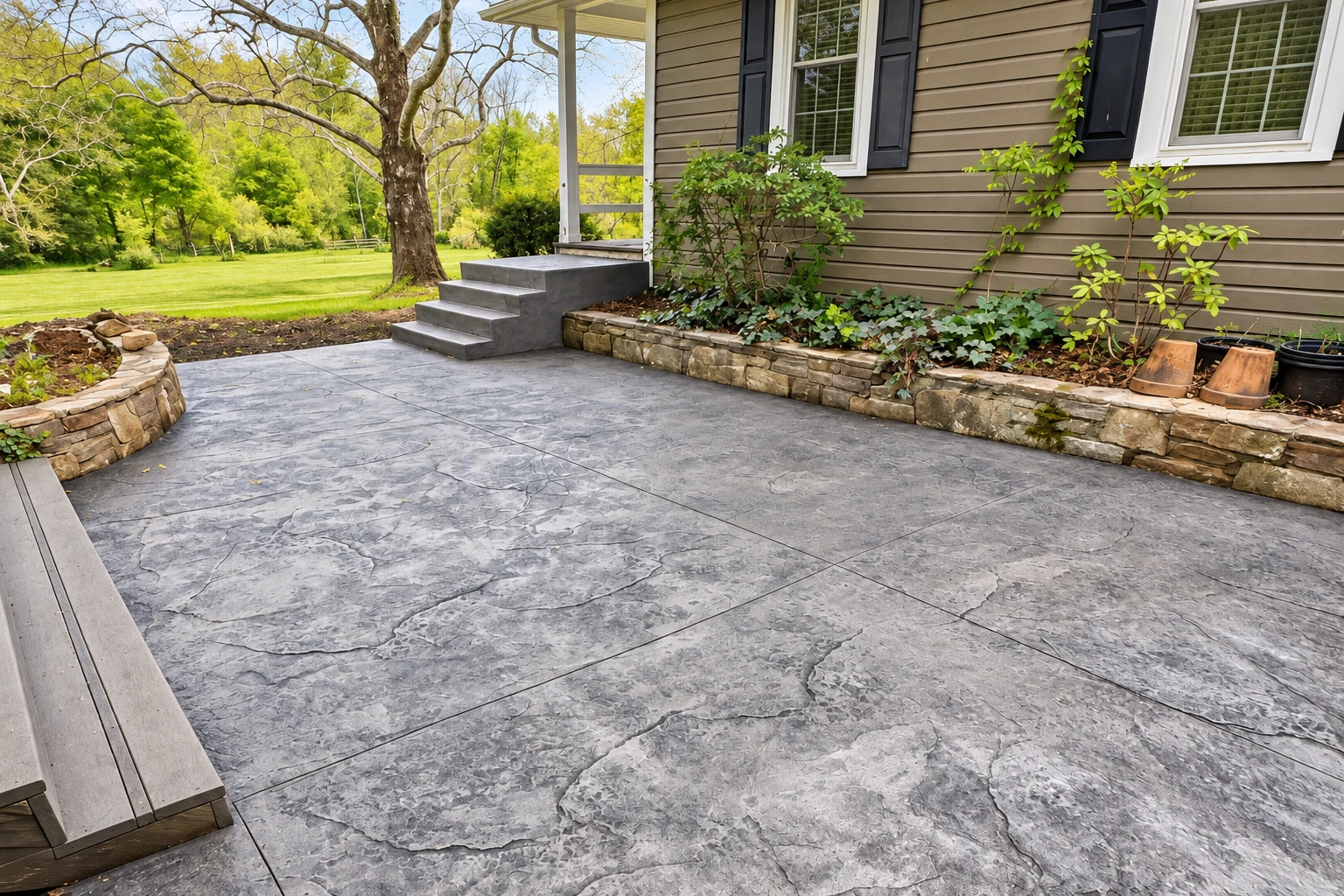
The price comes down to a few things I measure on site: the size of the slab, how thick it needs to be for cars or foot traffic, how much old concrete we break out and haul away, and how much digging and base the ground needs. Rebar, the steel inside that holds the pieces together if the slab cracks, adds to the cost. A stamped or decorative finish also costs more than a plain broom finish, the light texture that keeps the surface from getting slick. The schedule depends on whether the job needs a permit, when our crew is free and how long the concrete has to sit before you use it. Your written estimate lists every step.
Why we put the money under the slab
When an old driveway cracks and sinks, the cause is usually underneath it. Often the base was raked level instead of dug out and packed, so the slab settled with the dirt. Or the slab sloped toward the house and water got under it. We dig down, pack the base and check where the water runs before any concrete shows up. Then we cut control joints, shallow grooves that give the slab a place to crack where we chose instead of across the middle. If the budget gets tight, I'd rather you pick a plain finish than cut back on the base, because you can't fix a bad base later without tearing the slab out.
Getting ready for pour day
Before we pour, the truck and the crew need a clear way in, so move cars out of the driveway and open any gate in the path. Let me know about sprinkler lines or anything else buried where we'll dig, and keep pets inside on pour day. We like to pour early in the day, because concrete finished in midday heat can dry too fast and leave a weak, dusty top. After the pour comes curing, the wait while the concrete hardens and gains strength. I'll tell you when it's ready to walk on and when it's ready to drive on.