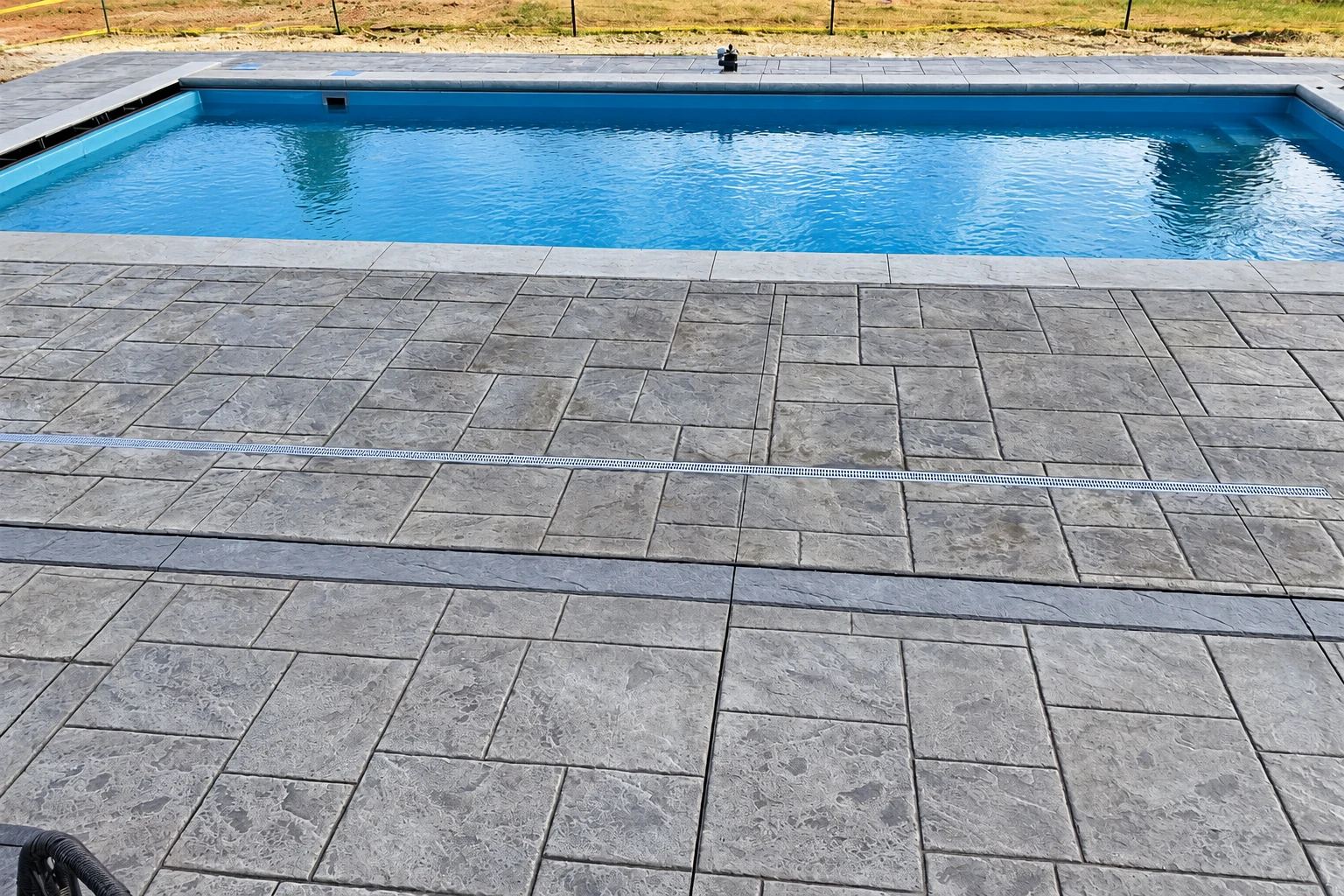
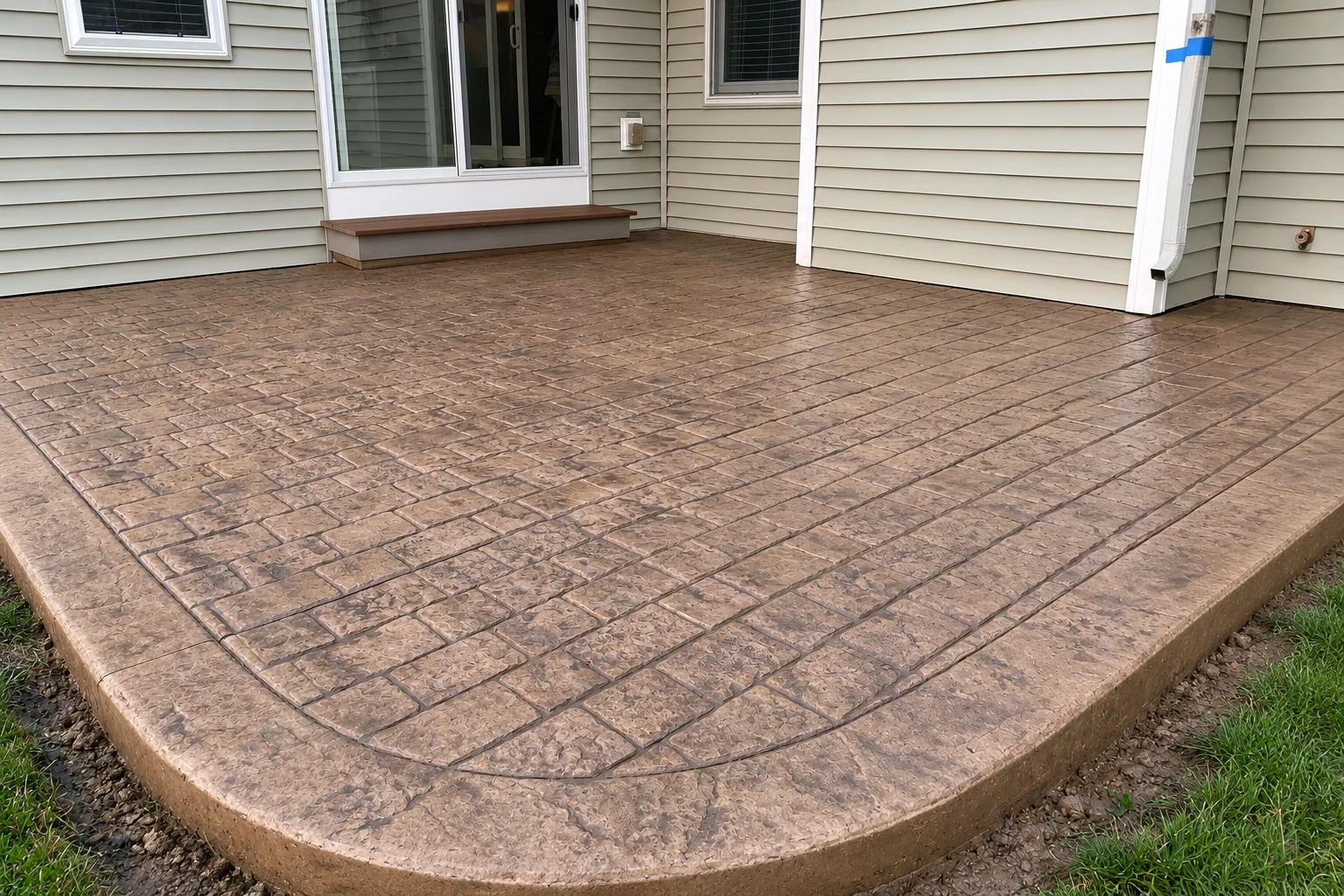
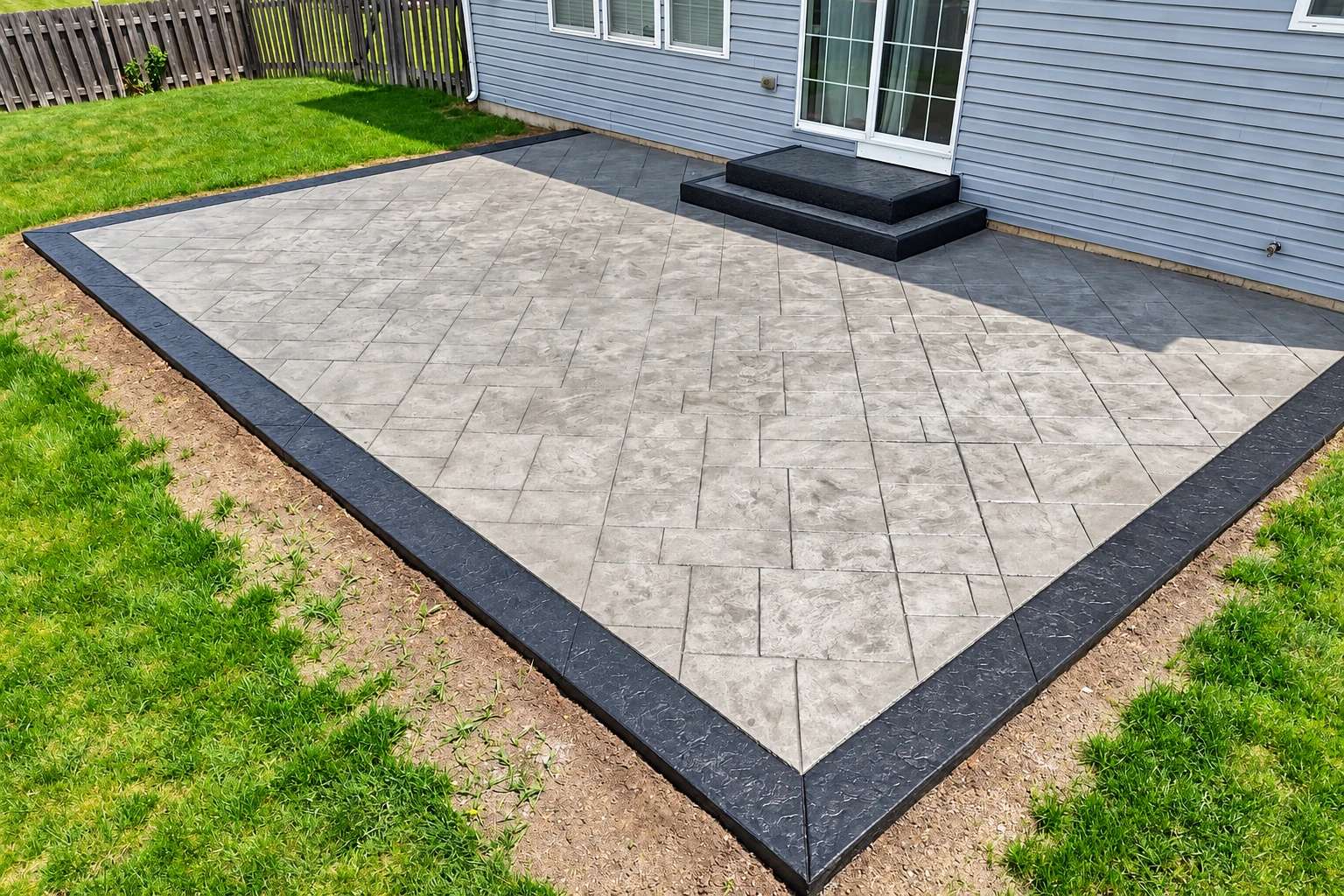
Live Oak is a small city in northern Sutter County, set along Highway 99 between Yuba City and Chico, with orchards and farmland on most sides and the Feather River and the Sutter Buttes close by. We come down from Chico for the same driveways, patios, walkways and garage slabs we pour in Gridley just up the road, and the questions people ask here are the same ones we hear everywhere, about cost, time off the driveway and cracking.
The ground here is flat valley floor, not the ridge we work on up in Magalia, and on a flat lot water won't run off a slab by itself. So before anything is poured, we check where the water goes and set a slight fall away from your house, because a slab that tips toward the foundation sends water right back against it.
What moves your price and schedule
Price mostly follows the size of the slab, how much old concrete or dirt we haul away, how deep we dig for the base and what finish goes on top. A broom finish, a light brushed texture that keeps the surface from getting slick, costs less than stamped or other decorative concrete. The schedule turns on the weather that week, whether the job needs a permit and inspection, and curing, the wait while new concrete hardens enough to take weight, so you'll walk on it well before you park on it. I measure every job myself, and your written estimate lists each step, so you can see what you're paying for.
Why we spend more on the base
The base is the part nobody sees after pour day, and it's usually the first thing a low bid cuts. When dirt is only raked level, it keeps packing down under the slab, and that's where the sinking, uneven sections people call us about come from. We dig out to firm ground and pack the subgrade, the layer the slab sits on, so it carries the weight instead of settling. Rebar, steel rod set in a grid inside the slab, helps hold the pieces tight if a crack opens. If the budget is tight, I'd rather put your money under the slab than into a fancier finish on top, because a good finish can't fix a slab that sinks.
Where cracks go and why
Concrete shrinks as it dries, so some cracking is normal, and the real question is where it shows up. We cut control joints, straight grooves set into the slab, so cracks run along those lines instead of wandering across the middle, and timing matters because a joint cut late can lose to a crack that forms first. We also plan the pour so the top isn't baking in the midday heat, which dries the surface too fast and leaves it weak and dusty later. When I walk an old driveway that cracked everywhere, missing or late joints are usually the first thing I look for.