Magalia sits on the Upper Ridge, the unincorporated part of Butte County just north of Paradise. The 2018 Camp Fire burned through much of the ridge, so many of the homes here are new builds on cleared lots, and the driveways, walks and patios around them are going in from scratch. Alongside those, we get calls for steps and walls that make a sloped yard usable, and for older slabs that have sunk or cracked.
We've been pouring concrete since 2013, and we're based in Chico and work across the cities around it, out as far as Orland on the valley floor. The ridge asks more of the prep than a flat valley lot does, because the ground here has often been dug up and regraded, and the water always has somewhere downhill to go.
Base prep on cleared and rebuilt lots
Ground that was cleared and regraded for a new house often carries loose fill, so raking it level isn't enough. We dig down to firm soil, then build and pack the subgrade, the layer the slab actually sits on, in layers so there's nothing soft left to settle and pull the concrete down with it. It's the part you never see once the slab is poured, and it's the first thing people want to trim when the budget gets tight. I'd rather spend the money there than on a fancier surface, because a nice finish on a weak base still cracks and sinks.
Slopes, runoff and retaining walls
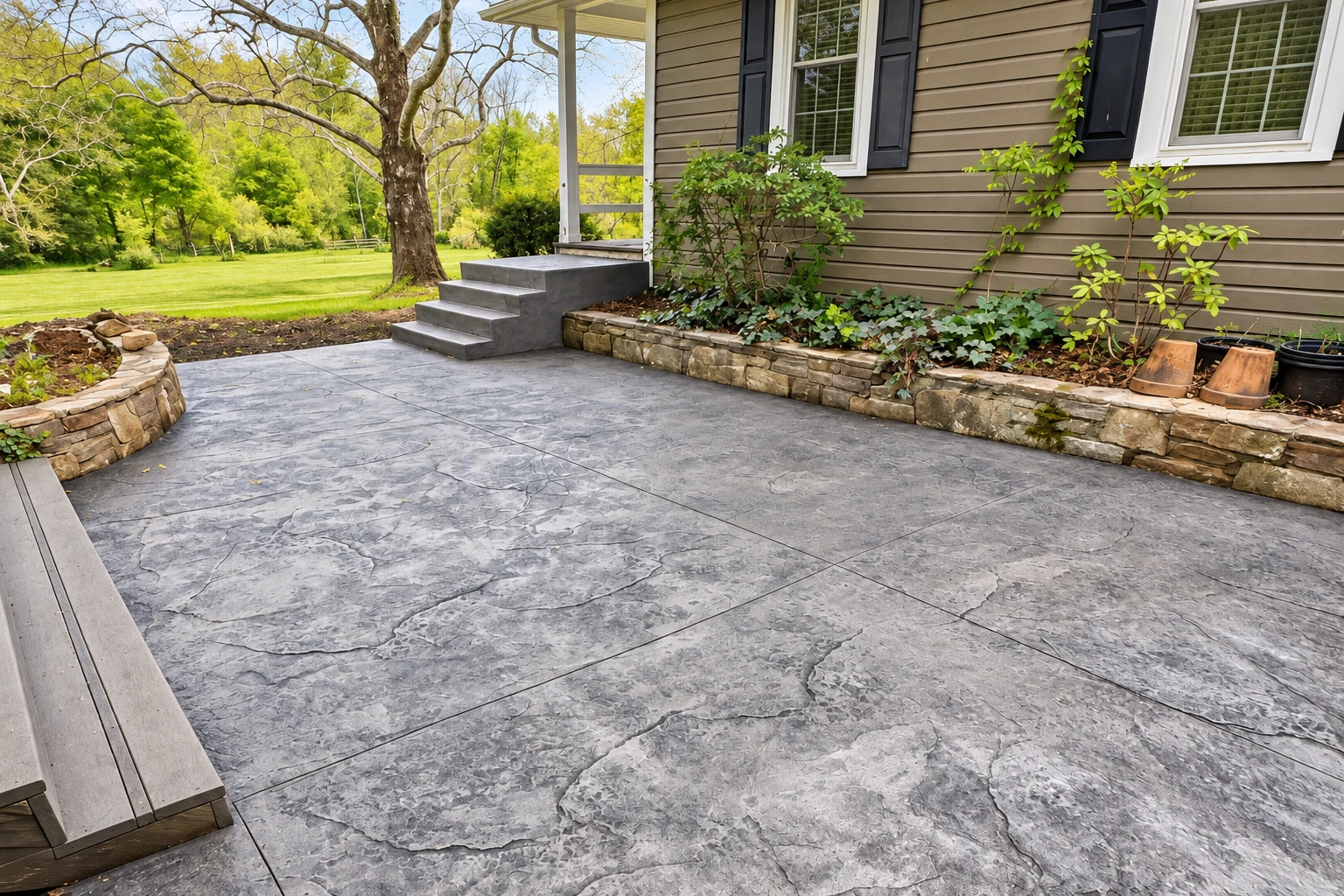
Many lots on the ridge slope, so before we set any forms I walk the property to see where the water runs. A slab that tips toward your house, or sits in the path of runoff coming from uphill, will keep catching water, so we set the grade to carry it away from the house. Where the ground drops off too fast for that, a wall is usually the better answer. Our concrete retaining walls hold back a cut bank so a driveway or patio can sit level, and we plan the drainage behind the wall at the same time so water doesn't build up against it.
Access, timing and what sets the price
Ridge roads and long, narrow driveways decide whether the concrete comes straight off the truck's chute or needs a pump, so access is one of the first things I check when I measure. The price mostly moves with the square footage, the slab thickness, how much digging and base work the ground needs, removing any old concrete, and the finish, from a plain broom finish, the light texture that gives shoes and tires grip, to stamped work. The schedule turns on any permit, the base prep, and curing, the wait after the pour while the slab gains strength before you drive on it. Your written estimate lists each of those steps.